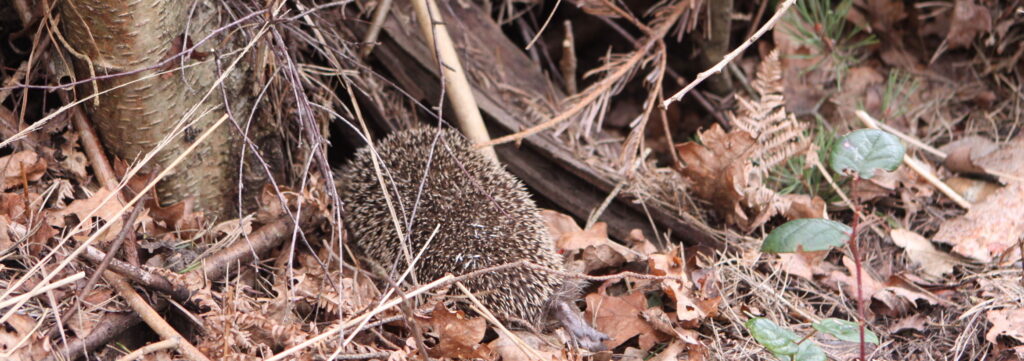
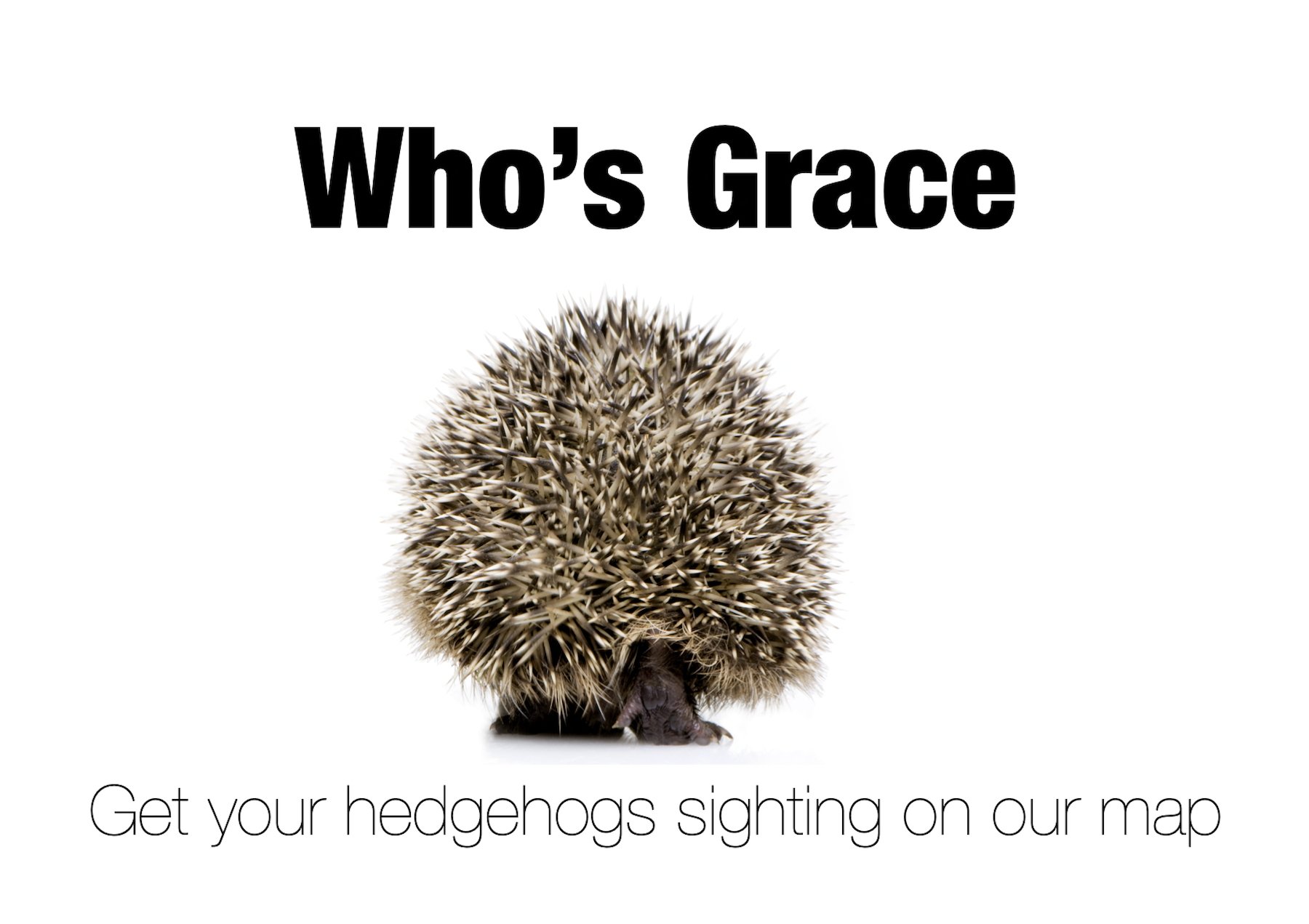
Who is Puddlestump?   Puddlestump is a busy bustling boy who thinks the big winter sleep is for wimps. He simply never rests. Puddlestump is a natural athlete – Have you ever seen a hedgehog running?  This boys ‘nippy’ – Don’t Blink or he will be gone! Puddlestump doesn’t hibernate as he has lots of food and lots of energy . He doesn’t want to miss out on anything thing so the ‘big Winter sleep’ is a waste of his time for him –  He’s clever and his ever twitching nose is lightning quick to find all the gardens that feed throughout the winter months – you’ll need to be quick to see him…

Help us find Puddlestump!

Hedgehogs Don’t Always Hibernate!  Did you know hedgehogs are one of three hibernating mammals in the UK – alongside dozing dormice and snoozing bats – Hedgehogs, being the really cool creatures they are, can survive well in extreme temperatures . . . but they cannot go without food.

But did you also know that many don’t hibernate at all. We’ve noticed a trend over the past few decades: some hedgehogs are no longer hibernating while others are sleeping only for days or weeks then suddenly reappearing for short spells. Our data shows that if you supplementary feed in your garden, hedgehogs are more likely to stay awake throughout the winter. 

To help us better understand, we’d love you to tell us where you are seeing hedgehogs appearing over the winter.

By using our interactive map below  you can add the details of any hedgehogs you see in the winter  months, especially ‘Puddlestump’ – the hedgehog who doesn’t hibernate.

Why feeding is so important right now

Like many of us humans, the first thing hedgehogs need when they wake up is food. However, while we can reach for the porridge, their supply of invertebrates has disappeared , changing state into pupae or reaching the end of their life cycle.

If kind humans have stop feeding hedgehogs, too, then our Spiky friends  can be in real trouble.

So, please continue to offer your hedgehog families a self-service food outlet right through the winter.  After all, you’ve been supporting the local population all year so why stop now when they really need you?
Remember, though, it’s always better to support an animal in the wild than to try to bring it into captivity. They are wild animals and need to learn the location of food and water, if they are to survive and thrive.

What food is best for your spiky friends

The choice of food offered can really affect a hedgehogs’ fur condition, spike density and ability to fight disease. So look for options that are especially nutritious. A hearty meal means a healthy hog, which means a happy hog.

If you’re using dog and cat food, please mix the brands to give a more balanced diet.

Why not consider a specialist option? It takes a few days for hedgehogs to get used to a new taste and, if your neighbours are putting on the Ritz next door, they may even turn their nose up at yours. They’re just like kids wanting ice cream, but don’t give in – they need to eat the good stuff too!

Remember: never serve milk in your hog bar. Hedgehogs are lactose intolerant and milk is definitely a no-no. Clean, fresh water is their top tipple. Finally, always check the size of dry food isn’t too big: remember hedgehogs have tiny mouths!

What we can learn from The Blackwater Babies of 1988

Many years ago we were called out to a garden in Blackwater because the homeowners were seeing a hedgehog appear on their snow-covered patio. It was eating then wandering off and they were concerned it was ill and too small.

It was a hoglet who weighed just 140 grams. It was strong but tiny. Then  the hedgehog mum suddenly appeared with another three hoglets.

We put the first youngster we captured back with his siblings and over the next few weeks received updates. The whole family were fed every day and we made sure there was access to water that wasn’t frozen over.

They were nesting under a dry shed where they had their mum together with food every night from their human friends. This combination of maternal care, a warm nest and regular meals saw all but one of the hoglets survive the winter. 

The Blackwater Babies proved not all hedgehogs and hoglets need rescuing so you should always check with you local rescue centre before removing them.

If you find a hedgehog who, irrelevant of their size, looks very healthy and purposeful, they’re probably able to keep warm  and finding food – usually from a human who offers meals regularly and consistently.  It’s good to be cautious: especially with tiny hedgehogs and that vital combination of a safe warm dry home and food could change at any time. If you are concerned you can always capture while you contact your local hedgehog rescue. If you do please make sure they are kept really warm while you call round for help. 

Always remember that hedgehogs are wild animals and, if we want them to get used to this crazy world, they need to live in it and learn from it.

On behalf of Puddlestump and cold loving  non-hibernating hedgehogs everywhere, many thanks for your help!

You can fill in the form to get your puddlestump on our map on our Great British Hedgehog Survey.

Grace’s Five Point Charter always advocates natural planting first to encourage the  invertebrates that feed Grace. After all, Grace is known as a gardener’s best friend for a reason! You will want her to rid you of your garden pests Hedgehogs foraging for a natural diet in a well stocked garden, are independent of humans and able to survive when people move house or go away on holiday.


hedgehog365_banner

Sign up to our newsletter here

Keep informed of all we do at Grace the hedgehog...

Please wait...

Thank you for signing up! 

  • Menu
  • Categories
Sidebar Scroll To Top